2026-08-14 · David Ramirez
Roof Algae and Black Streaks – Why They’re Common in Rosenberg
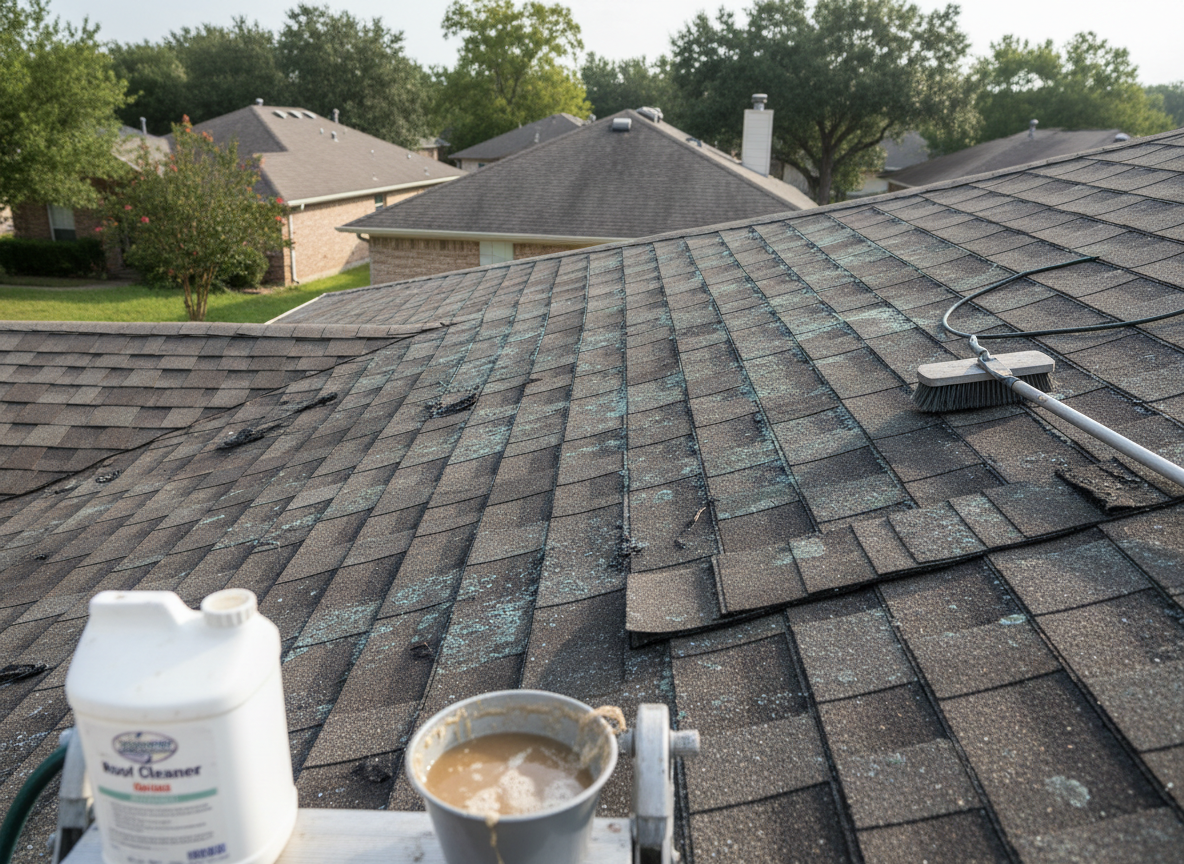
Rosenberg sees roof algae and black streaks mainly because the Houston region's subtropical climate delivers long stretches of heat and humidity that let algae thrive on shingles. The same mild winters keep the growth alive year-round instead of killing it off with hard freezes.
Why Does the Local Climate Feed Algae Growth?
Houston summers often push daytime highs above 90 degrees with humidity that rarely drops below 70 percent. Those conditions let algae spores settle and spread across asphalt shingles in just a few weeks. Rosenberg sits close enough to the coast that the same moist air reaches its neighborhoods, and the lack of prolonged cold snaps means the streaks never get a natural reset. Older homes in the area often have shingles that have already lost some granules, giving algae even better footing.
How Do Black Streaks Actually Form?
The dark lines come from a mix of algae and the dirt it traps. Once the algae colony starts, it holds moisture and pulls in pollen and dust that darken over time. In Harris County homes with south-facing slopes, the sun bakes the growth into the shingle surface, making it harder to wash off after two or three seasons. Wind from nearby open fields can carry extra spores, speeding the spread across an entire block.
What It Costs to Handle Algae and Streaks
A basic algae roof removal on a typical Rosenberg house runs $400–$800 depending on roof size and how thick the growth has become. If the shingles are damaged underneath, adding shingle roof repair pushes the total to $1,200–$2,500. Full roof replacement on a 1,800-square-foot home usually lands between $8,000 and $14,000 when you include tear-off and disposal. These are real local ranges based on current material and labor prices.
When to DIY and When to Call a Pro
You can safely spray a mild bleach-and-water mix from the ground with a pump sprayer if the roof is single-story and you stay off the ladder. That often knocks back surface growth for a season. Skip any work once you need to walk on the roof or if you see missing shingles, because one wrong step can create leaks that turn a cleaning job into a bigger repair. For two-story homes or when streaks return inside a year, it is time to bring in a crew that knows local permit rules and can check for hidden damage.
If streaks keep coming back after cleaning, the shingles may be at the end of their 15–20 year life and need replacement instead of another wash. Algae roof removal crews can treat the surface and apply a zinc strip that slows regrowth for several years. Pairing that with regular roof cleaning keeps the problem from turning into leaks. Homeowners in Rosenberg who notice early streaks often catch issues before they reach the underlayment.